TLDR
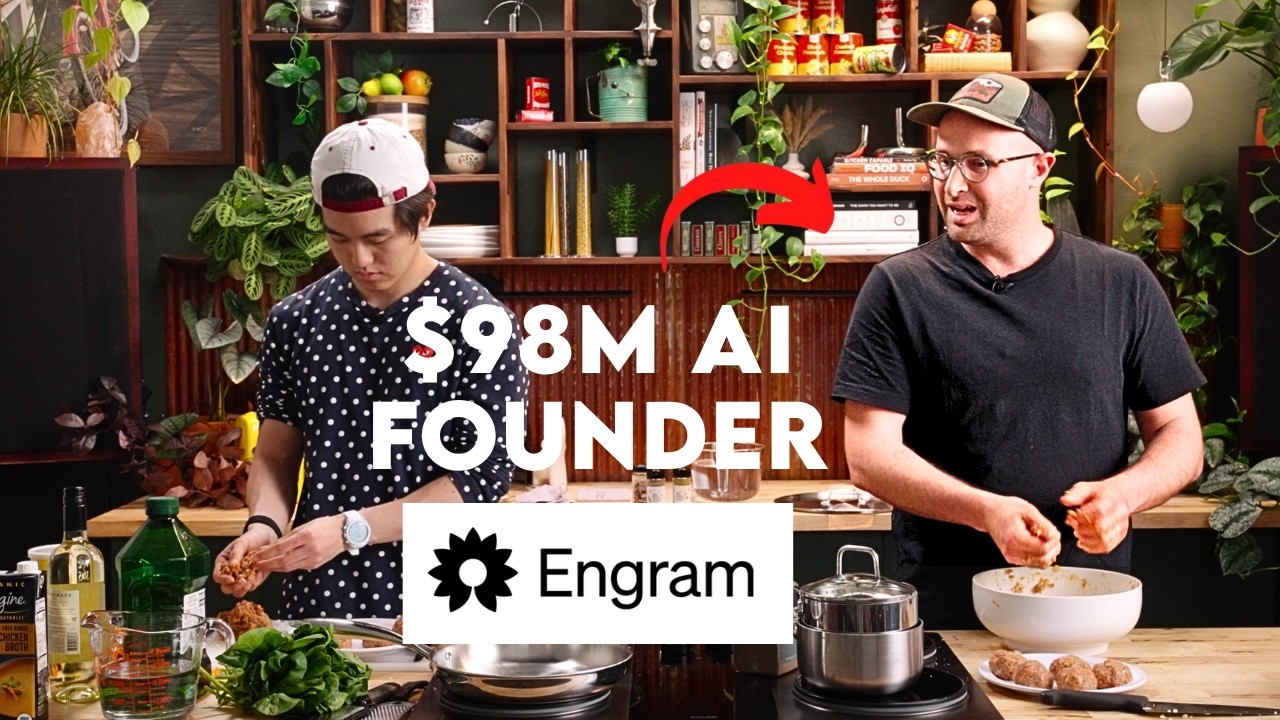
Engram CEO Dan Biderman argues that long context windows alone cannot solve the AI memory problem; models need compact, learned representations ("cartridges") created via gradient-based training to achieve token efficiency and deep understanding. He contrasts this with RAG and compaction, which become lossy and expensive at enterprise scale, and envisions a future where models continually learn from user data in a tight feedback loop.
Key points
- Engram's approach uses gradient-based training to create compact "cartridges" that represent knowledge in model weights, achieving up to 1000x compression over raw context.
- Current LLMs are like chefs reading a recipe for the first time every time; Engram aims to build intuition by internalizing knowledge through training, not just reading.
- RAG and compaction are lossy and become impractical at the trillion-token scale that AI-native enterprises will soon generate.
- The company focuses on token efficiency and cost reduction, enabling models to handle longer-horizon tasks that were previously infeasible.
- Engram's ultimate vision is a personalized model that continually learns from each user's data and feedback, with the model itself deciding what to internalize vs. externalize.
- The team combines expertise in neuroscience, statistics, systems engineering, and LLM performance to tackle both research and infrastructure challenges.
- Routing between models is seen as a complementary solution, but the core differentiator is the ability to learn from data in a tight, user-specific loop.
Tools mentioned
- Engram
- Harvey
- Mosaic
- LoRA
Techniques
- gradient-based training for context compression
- parameter-efficient fine-tuning
- continual learning
- test-time training
- model routing
- context compaction
Takeaways
- Long context is not enough; learned representations in weights are needed for deep understanding and efficiency.
- Enterprise AI will soon face trillion-token datasets, making current RAG and compaction approaches unscalable.
- The future of AI memory involves personalized, continually learning models that internalize knowledge from user interactions.
Transcript (captions)
I'm too absorbed in the cooking, man. I'm sorry. I'm >> fried. Um, >> the entire show I pretended to be the cooking expert here. It has to be pure crazy. Just kidding. >> Hey guys, welcome to the Laton Space Cooking Show where we invite founders and researchers and let them cook. Today we have a very special guest, co-founder and CEO Dan Bman of Engram. >> Nice to be here. >> Yes, thank you for coming. Um, I heard or we got connected through Jack who was saying that you're a very good cook and again congrats on the $98 million seed round. Do you cook often? How frequent is it? I assume you're constantly researching and building and >> Yeah. So, I would say since I started the company, there's a little bit less cooking of this type. Uh, cooking other things, but cooking is something I've been doing since I I was a kid. My parents cook, my grandparents used to cook, and it's it's a way for me to kind of relax and digest things and think things through. >> Great. Yeah. Well, I'm very excited. Today's a little different where we're actually going to have Dan lead us through one of the recipes. Do you want to reveal to us what we're making? >> Yeah. So, I was thinking we can make u beef meatballs with some vegetables and have them in swimming in some kind of white sauce with white wine and and chicken stock. It's a pretty nice Mediterranean type meatballs that I've kind of stumbled upon recently when visiting my parents in Tel Aviv and cooking stuff with what they had at home. So, I thought it would be nice to to redo this with you and see how it feels. >> Great. Well, I'm very excited. Do you want to kick us off? >> We're going to fry the onion. I'm going to chop it and going to chop some garlic and then we'll make make them into balls and and fry them up. >> Fry them. Great. Okay. Well, let's get started. We'll both do it in parallel. Awesome. Um, but yeah, I guess to start, I'm kind of curious about your background. So, you wanted to become a professor, if I recall correctly, and you also have experience in the Israeli military or special forces. >> Yeah. >> Um, how did that turn you into becoming a founder of a research? >> Yeah. >> AI research company? >> Yeah. So, I guess uh it's it's easy to connect the dots uh looking backward, but in real time, it was not. I didn't uh grow up planning to be this founder NSF working on this hot topic in AI things came to it. Um so I grew up in Tel Aviv and uh and as you said uh was an officer and and working on special operations specifically naval special operations which was very entrepreneurial. It was uh basically finding and identifying crazy things we could do and and prove to people that we should scale resources and and people to actually do them. So it was a lot of a lot of researching, a lot of pitching and then a lot of hard work to make things real. >> Yeah. Um and then after I finished this um I went to university um and studied cognitive uh neuroscience in Israel uh in an interesting program where um actually a lot of Israeli novelists and professors and scientists and and even chefs you the Israeli chef went to this program many years before me. Um, and so I went there, got really curious about the brain, curious about human behavior. >> Yeah. >> Curious about statistics. And then I went to to New York to do a PhD in computational neuroscience. Um, which is a community that's been one of those stubborn communities that cared about neural networks for many decades before it was a hot topic. Yeah. >> Uh, here in the valley. Um so I was there and studied with some statisticians and physicists and biologists trying to understand um how neural networks can be used to understand the brain to understand animal behavior >> and uh and then decided that I wanted to go deeper into the LLM world after seeing Chad GPT. So started working at Mosaic uh where I worked on Laura and met a bunch of great people and then from there I went to work with Chris Ray at Stanford and Scott Linderman who both are co-founders of my current company and where I met my co-founder Sabri and my other co-founders Jack and Jesse uh who work on very similar topics from their labs in Cornell and Berkeley. >> Yeah. No, it seems like a very very research focused and also serendipitous. Going back a little on your background. >> Yeah. >> Is there something about the Israeli special forces because I think it was a whiz co-founders, right, who are also ex special forces. >> Yeah. Uh we work pretty closely with Assaf Rapaort, the WHIS CEO >> who's a mentor to me. Um and um yeah, there's interesting things going on. um there I would say the the most important thing is actually uh when you're 18 it's joining the intelligence or taking on responsibility uh the interesting bit about it is that you're not just in a student mode you're not just heads down doing exams and projects rather you interact with with grown-ups and you have resources and you argue your your for your uh budgets and things like that >> um and it forces you kind of build a little bit of social skills, a little bit of maturity. Um, which which I benefited from >> um and um >> you know there's a reason many countries in the world choose not to have everyone go to the army. It's a long time and it's and it's uh a package deal and I was uh in the Israeli army in different years, not the ones that are the recent ones. Um, so it's not like I recommend everyone goes to the army, but I would say that it forces you to kind of think about other other aspects of your personality, not just the intellectual ones. And also generally, I would say Israel as a culture is a place where um you can basically you get multiple shots at goal. If you're not the best in high school, um you still might have a a good position in the military. And if you're really good, more doors open up for you for university. And even if you didn't do anything super interesting in in military and got to university and found out you have good and deep inclinations in science and engineering, you can be the most successful person. And we have some of those Israelis who are um leaders uh in various uh academic and technological places. So I would say yeah it's mostly like >> you can basically the cards the cards are adult multiple times more emphasis on social aspects more emphasis on being mature on being a team player. Uh but again it comes at a price that you get you you're older when you get to things. Um, so I started college when I was 24, which is uh a middle PhD in and an American >> uh university. But yeah, >> so it makes sense. I think it's great how it gives you a lot of shots on goal and is a very beautiful culture. And now fast forwarding to today back to engram. >> Yeah. >> What kind of prompted you to focus on this issue with context? Were there specific breakthroughs? Was it, you know, the performance of open source models or even just the issue of context rot long horizon agents or was it just that you're very passionate about this area as a whole? >> Yeah, >> I'll answer that in a second. Can we can we heat up some? >> Yes, let's start getting going. So, >> here to fry up the >> Great. So, we can turn on the impulse stove. So yeah, I my my PhD was focusing on on on a field that's not super in vogue today, but I think will become super crucial again, which is semi-supervised learning, >> which is you have very little data, you don't have infinite trillion tokens of data, a very infinite, you have very small set of examples >> and from them you want to extrapolate and learn efficiently for >> uh and and achieve things more more generally. So how to be data efficient. So my whole academic work was basically all of my papers had the same plot were on the x-axis I had some some cost some resource and on the y- axis I had um I had a accuracy sort of parto curve and that's been my my upbringing efficiency how to do more with less um salt. Yeah. Yeah, we can put some salt. >> Um, and I went to to Chris Ray's lab um and Stanford at Stanford and there worked on agents on ideas called minions uh and and ask kind of the question of how can we have agents interface with very large uh corpora of knowledge in a way that's economical and when we introduce some patterns that involve sub agents uh a bit before it was uh popular. Oh, sorry. We can also put this I realized >> and from that perspective of efficiency and of cost um >> we started asking ourselves actually >> um is there a more efficient way to interface with data that's not just agentic orchestration and things like this can we actually use the the magic of training to um have models that are efficient faster and and and can operate with fewer tokens and some of these ideas kind of were developed in parallel by some of us uh Jesse, Sabrina, myself. >> Yeah. >> Uh and the common theme was that if you have a very large corpus of knowledge um and you allow the model, you give the model time to study it in advance to basically ask itself questions, give itself quizzes, try to solve problems, and then train it using gradient descent in the same way you would pre-train a model. Um then you can create very compact representations of your context that can later on you can load them. We call those cartridges. These are like capsules of knowledge you can load in and out of the model that are like a brain state that describes the model's world and the corpus in a way that's maybe a thousandx more compressed. And when you use them you can basically uh use far fewer tokens be less confused more accurate and things like this. So we got >> and these are task specific cartridges. >> So they can be corpus specific like documents inside a company. They can be task specific like you want to learn a certain skill. >> But the idea is that in many cases it makes sense to go beyond textual representations. So when we're cooking now and we have all these like great textbooks or cookbooks here somerat and you know book from French laundry these are amazing books that I I respect. But to say that because we have the books and we can read them to say that we deeply know how to cook to the same level of Samosat or or or Thomas Keller. Yeah. It's incorrect. Right. We can read those things and we can repeat all their steps in a very robotic way and we can come in current LLMs are like coming into the kitchen >> first time every time reading the textbook uh cooking the dish measuring everything. uh but they don't have the intuition of a of a chef that's pinching salt and needing kneading dough and things like this. So the kind of thing we're after with this kind of uh training and creating those cartridges is this kind of intuition in the models that goes beyond notes and recipes to the kind of intelligence that allows then allows you to come come up with the next recipe thing that hasn't been explored before to do the next uh move and the next extrapolation. Yeah, I guess double clicking on building this intuition, could you kind of contextualize it more on how it would be different from extracting let's say using a cooking example if you get all the useful notes and useful section from a cookbook that will help you actually understand all the complexities of making a dish just providing it I guess that would be similar to rag getting just those chunks and then understanding that I guess in context and then providing an output. >> Yeah. So, this is this is an excellent method. Um, we do not take the bet that I'm putting two eggs in here if that's okay. Um, >> and is this enough grated carrot and zucchini? >> Yeah, excellent. You can put it in here. >> Um, >> yeah. >> So, we're not taking the bet that no need no notes need to be taken, right? >> Yeah. Put all of it inside. Mhm. >> Um, all the greatest chefs in the world, they have notes and they have books and they >> they have diaries and they document what worked and what didn't work with their experiments, >> but they also have brains that they also have hands and and uh and uh a tongue that can remind them how something tastes and what worked and what failed and what was easy and what was hard. So uh in all of our work we never say that textual representations are useless. We basically use them all the time and we construct those wikis and knowledge bases and things like this. >> Yeah. >> Um at the same time what we say is that the layer above those the learn the layer of intuition and learning uh that is in the form of numbers of parameters um is is the full experience of the human chef. the best chef in the world is all the notes combined with a nervous system that reads those notes and can implement them and innovate them and maybe don't return to the same notes over and over again. There are some dishes where they don't need to to reread them. >> Mhm. >> And the current problem in um so I was saying that um we want we want the best of both worlds. Every knowledge worker >> if they can't write notes and they can not document the events of the day they would be uh in a disadvantage. But if you wipe their brain every evening, they would also be at a severe disadvantage. >> Yeah. >> Um so we want to have the best of both worlds. And uh the thing is that textual representations can take you uh a long way. Uh but the thing we're thinking about is like look the at the rate at which knowledge is being created with now agents working on behalf of knowledge workers creating artifacts code documents uh presentations >> I think that people don't fully comprehend the size of the >> of the knowledge workspaces they will deal with in 18 months >> um in 18 months many companies would have maybe trillions of tokens which >> of internal company >> of internal company data proprietary data I'm talking about like maybe trillions it sounds exaggerated but I don't think it's an impossibility if they're really AI native >> and I think and and what are trillions of tokens that like when I was at Mosaic 2 3 years ago like we call this internet scale data pre-training data >> so imagine every company has data that it's basically internet scale data >> um >> and I might need uh salt and pepper and the breadrumbs >> for this. And we don't have a sink here, so hands will be dirty. I hope the audience here is forgiving. >> Um, >> got to get your hands dirty. >> Yeah. Awesome. I guess the principle here I once heard from a chef is that a ratio of one one of meat with everything else is usually a healthy way to make meatballs. So, I think we we're >> Yeah, that's fair. We are salt and pepper. >> Nice meatballs. They're a bit warm with those fried um >> We're back with the >> We're back. >> We're back with the fixed meatballs. >> With the fixed meatballs. It's team building activity here. >> Yes. >> Oh, yeah. Let's put those spices that you brought. I trust you on these ones. >> Cumin. Let's put a little bit. Not a ton. >> Yeah. We won't dump it like last time. >> Cumin is my wife's favorite spice. >> Oh, yeah. Cumin is great. >> I have mixed feelings about it, but >> Okay. >> Yeah, it's good. Yeah. >> Good. >> Good. So, we have the meatballs. Now is the time to make the balls. >> So, we were talking about >> What were we talking about? >> I think I'm too absorbed. I'm too absorbed in the cooking, man. I'm sorry. I'm >> No, it's good. You were pitching things here. You're talking about how companies will have a corpus of data that will be at the scale of the internet. >> Yeah. Yeah. And maybe maybe today some they don't have it and maybe today you can go relatively far with textual representations. They're also interpretable. They're very good. >> Mhm. >> Um but I just think at a certain scale even those textual representations will be hard to make. If you have trillion tokens, how do you create exactly a wiki or an index of those that you keep updated all the time? How big is this um knowledge base that you create? How expensive will it be to process it with frontier models that know nothing about your your company? >> So is it just that using frontier models will be expensive because that's start from scratch every time. Is that the main? >> So there's the element of expensive because you reread more things, you consume more to tokens. That's one. >> Yeah. But two is like for the agentic tasks of 18 months from now inside those major repositories of knowledge and asking the models more and more things and under specified ways. >> I suspect that the accuracy of the models would would go down the the phenomenon of context fraught, right? The model has to read more. It will be less accurate and we know this and it will remain the same thing at even at the 10 million uh context window scale. >> Okay, that makes sense. Okay, let's go wash our hands real quick. We'll be right back. >> Great. And we're back. Hands are all clean. So, now what's the next thing? Just frying the meatballs. >> Yeah, let's fry those meatballs. >> You want to turn this one? You just press it and then turn it. >> Very intuitive. >> And we'll put some oil. >> Okay. We could put these in. And >> while we do that, I guess >> more so on the question of like long horizon agents. >> Yeah. >> Um, what's the main issue that Engram is trying to solve? So right now if I were to steal manand the opposing view um maybe company internal company data isn't actually big enough where I'd need to put it into the weights like what's the issue with just having rag or um having specific models or even cheaper models since open source models are also very performant to handle a lot of tasks. >> Yeah. So I would say like um a thorny question in the research community is can you come up with an example where only in weight training would work where in context learning will fail. >> Mhm. >> And turns out it's very hard to devise such examples and for every example you give someone can ask well what happens if the the next um the next payable has a 10 million context window. >> Mhm. Um, and the way I see it and kind of my scientific upbringing, I see all of these questions of of continual learning and memory as questions of long context uh in disguise. >> Um, if the models could see a whole whole company data and in principle would have this infinite context window, what then is the limitation? So the limitation is twofold. One is that we know even at very small scales that the more context you feed to the model, the more confused it gets. It's called the context rot. So you can feed in a certain uh number of tokens into the model and not get an error, but doesn't mean that the model can reason in in a in a holistic way about them. That's one thing. And >> and what's the problem with compaction? Is compaction not as useful, would you say? >> So I think compaction is is improving by the day. Yeah. Yeah. >> And compaction for those in the audience who don't know what it is, it's like models actually managing their own context uh evicting certain tokens and and keeping others. Uh compaction works. Uh that too when you go into a longer horizon, compaction by definition is lossy. >> You discard some and keep other things. And I think it's it's a it's a correct way to to go. Uh but it's it's also like very deterministic. Either you're in or you're out. in the current versions of compaction uh show these kinds of uh uh issues when when very deep into the session you can get um confused and you can get um forgetful. >> Mhm. >> So we think compaction will be part of the story. >> Okay. >> We think another part of the story is some sort of neural memory trace which too is a lossy thing. it evicts some and and keeps some but not in the text uh representation in the weights representation but I would say the main thing we're trying to solve or the main thing for which continual learning is needed one is token efficiency and cost which is a major issue that wasn't actually an issue when we started the company late last year and became more urgent now and problem number two is if you can do uh if you can do the same thing when with fewer resources is when you scale up to very large resources, suddenly you can take on tasks that were previously not possible. >> Way more long horizons, way more uh adaptive >> and we're not quite there yet. Uh we're focusing right now on on the first component which is getting these models to reason on large context with fewer tokens and do it in a way that's that's more uh uh less confused. >> Yeah. Yeah, >> but we think that eventually uh part of the >> I'll take >> part of the part of the solution for very hard tasks in in science and engineering and defense and all that stuff will involve some form of gradient based updates um during uh during uh doing these long horizon tasks. So some people call this u test time compute or test time training. Um these are just different names for the same thing. I think we have a a proof of existence from pre-training that um you can pack a lot of information in very few numbers very efficiently. Um so the examples we like to give is that uh if you take a llama 70D model and you load one article from Wikipedia which is a few tens of kilobytes and you have the model read this uh the brain state of the model when reading this few tens of kilobytes is like 80 gigabytes 80 gigabytes on on the HBM of the GPU. >> Yeah, >> it's an insane amount and the entire set of parameters of this model would be like 140 or or so gigabytes FP16. So those 100 or so gigabytes with some distortion represent the entire internet. And this one article about Taylor Swift is like same order of magnitude memory consumption on the GPU. So it's highly memory inefficient. That's a systems problem. That's the the KV cache monstrosity that the smartest people in the world are trying to solve from the chip side of things and from the >> from the software and kernel side of things. Um but yeah so I would say another way to look at what we're doing from that angle from the systems angle is basically uh if we if we can get a bit more technical instead of doing those uh prefills where the models is reading and reading and reading a a corpus uh we are kind of like the we're destroying prefill we're scaling training compute in some other time so we can load the thing into the model and it can just immediately start decoding or prefill a a little bit and this kind of goes a hand inhand with trends in how data centers are built out this aggregating prefill and decode and doing this on different specialized uh cards and uh and this is part of our part of our initial interest in >> okay so it seems like we're mostly ready here I think it's a good time for our >> white wine on both of them >> you want to do that >> yeah and do you have any tangible examples on this when you're talking about your approach. So if you think about um let's think for example about like an enterprise uh a firm or um investment banking a law firm or investment banking they can have many client matters uh many >> like a lot of knowledge work >> a lot yeah so many client matters they have various clients clients do financing mergers and acquisitions and things like this and take loans and do deals >> want to put this on >> not yet no not yet we want to let it uh >> let it >> let it reduce a little bit. Okay. >> Yeah. And so, for example, these are the kinds of things we we work with Harvey, very very large file systems. >> Uh and there's many queries that agents might run into. Either humans ask them or the agents have to solve them, which are these kinds of like ambient hard questions that are not easily searchable with rag. For example, if you want to ask like which M&A deals haven't we completed this year. So to actually solve this problem, you have to go client matter by client matter. >> Yeah. >> Read all the files. You can't read in any place that it was not completed. You have to take the gist. >> You have to understand the thing hasn't the loop hasn't been closed. Thing hasn't been completed. And now you can solve these tasks with with Frontier models and compaction. And when you ask them to do so, they will consume thousands of dollars for queries that we think are harmless that every employee in the company would be able to answer. >> So this is just like one example. But these kinds of holistic things that are you know you can get the gist if you read everything but you can't find a thing in one thing. The kind of queries where the whole is greater than the sum of its parts. That's where uh this kind of magic of training uh comes in and that's the the magic that that you know Ilia and others have shown us with pre-training right you learn the entire web >> in these sets of weights and suddenly the model can infer things can generalize can interpolate and extrapolate to new things and that's the kind of knowledge we want to do and it and it's not a not a coincidence that we're training on the entire web and we're not just >> doing rag over the entire web or putting it in the catalog and reing it in time because we do think that learning from a lot of knowledge somehow creates these associations in the model. >> Gotcha. >> So some of it is concrete problems of now other parts of it are bets that in 18 months from now the scale of the data will require the methods that we know from pre-training work. >> Gotcha. And so are you doing primer efficient fine-tuning for specific companies like Laura based off of the corpus? >> Yeah. So our ambition in the long term >> but also start >> Yeah. Yeah. >> So our ambition in the long term uh is that every person has a has a model or or a part of the model or a set of weights >> uh that >> Yes. >> that represents their knowledge, their expertise learns from them that the more time they spend >> with the model, the better it gets for them. The more data they give the model, the better the model is for them. >> They control those sets of weights. >> It's theirs. Um, >> and the rice. >> Uh, and they're incentivized to let let's let it boil a little bit now. Yeah. Um, so they're incentivized to >> we can we can put the spices. >> So they're incentivized to to make it better in the same way that you would work with with a Tamagotchi. The more you nurture it, the happier it is. And that's the kind of thing we would like to create with models. So that's the ultimate continual learning. And we think on the extreme scale, on the single human scale. Um, >> turns out this is not just a research problem. That's a major infra problem. And in the long long term, I do think these things will actually run on people's devices. >> Yeah. >> And we're seeing right now the the new hardware on personal computers is already uh you know soon approaching the ability to run inference on close to trillion parameters models >> uh which will be very interesting for that kind of personalization. But in the shorter term we do think that uh the kind of large corporate of knowledge very dense with a lot of expertise u can be found in the enterprise um that's where people spend most of their time that's where AI is is actually being used the most yeah >> so we we we go there and that's our bet and there we're our bet is that parameter efficient fine-tuning methods like chloral like cartridges like memory layers different things we we contributed to as as a research team um can actually represent knowledge and can be combined with other methods that are like context management traceable methods that that people can can use and understand and and audit. >> Yeah. >> So it's a combination. >> Gotcha. >> So again, it's like it's like the chef that has the cookbook and it has the recipes, has the diary, but also has the nervous system that learns from every session. >> So it's boiling here. It's all Yeah. Pretty efficient here. >> Yeah, very powerful stove. >> Great. And then medium, low, then wanted. >> Let's mix it up. Yeah. Salt. Did you put some salt? >> Here. I'll put some salt in. >> Um, we're going to have yellow rice courtesy of Alan. >> Yes. Um, great. Well, we're nearly there. >> Yeah. We'll let the these guys cook for a little bit. with what you guys are attacking, how do you determine what you know should live inside of the weights, what should still kind of be handled with rag, um where things should be orchestrated. >> Yeah. So, this is a major open question I would say for us and for everyone else and it's not just an open question in in uh AI and in a startup. It's an open question in the study of human memory from its its uh inception. And it's like what kind of knowledge should be internalized and what kind of knowledge should be externalized? Does it make sense for you to remember every thing you've seen as a person? Uh people who have that uh often are not enjoying that capability. Yeah. >> And it's it can be very distracting. It can be uh it's sometimes very scary. >> Um so a certain amount of forgetting is healthy. Certain things you want to remember in the weights and certain things you want to put in in text. So I would say it's an open research problem. The way to work on it is to train models both to train models to manage it themselves and that's an active area for us have the model know like without any explicit supervision signal to determine this kind of stuff I can pull from my brain >> and that kind of stuff I rather keep in notes and you can imagine these kinds of things uh relate to like the salency of certain parts in the data how how often the frequency at which they repeat and the affordances of like what can you do when you know this fact from your brain? Uh you can imagine that uh remembering I don't know remembering uh the the your room number in a hotel for tonight is less important than remembering your partner's phone number or remembering your address. Right? So >> so it's higher signal data to >> higher signal data. And now the thing is if you start manually uristically saying this is in this is out then it becomes a whack-a-ole. Okay. Every every person in every enterprise has different data and you can't really very easily pick and choose what goes in, what goes out. So the holy grail is have the model learn for itself. Have it operate with a notebook where it can take notes, have it operate with a with a brain associative parameter efficient thing that it can read from and have it decide when to go to each and do this with training in an unconstrained way. And we're working on it and more breakthroughs are needed. But I think that that is the dream that the model learns what what comes in and what comes out and we get out of the way. >> Gotcha. Okay. And so that's the end goal you want to achieve where it's completely autonomous. So there's no human in the loop to kind of tell it what to fetch. Um >> the human in the loop can be the user and if the user chooses to say keep this in or keep this out. We would like the model to listen to the user. >> Yeah. >> But we would not like to depend on the user. Right. So user feedback is something we can learn from and we can learn from implicitly but we don't want a person supervising every step because that's not the way uh people enjoy using uh language models. But I would say the kind of models that we're building uh unlike other models where you you do thumbs up and thumbs down and you're basically like helping the provider maybe in the next version give you something that's more workable. >> Yeah. here. If you give a thumbs up or thumbs down or you say something, you know that someone is going to scale compute on what you said and someone's going to go and practice uh to get better at what you said. And this is kind of the thing we want to get to like building trust with the user that uh they're listened to and they're making a model that's better and it's not generally better for everyone, it's better for them. >> Gotcha. So the benefit is it being a tighter loop um compared to the like you said a general model provider the UI having a thumbs up thumbs down you don't know if that's actually going to contribute to the feedback. Yeah, there's tighter loop and we use different machinery. If if we allow ourselves to use the machinery of training, we know we can >> we can hammer that in. There's no uncertainty about it. And and >> another important thing to say is not everything that a user tells you is ground truth, right? Not all of us, including myself, are Einsteins and we can say things to the model where we think we're right and the model is wrong. >> And increasingly the models will get better and increasingly they'll know more things than we do. So the model in some way has to learn and understand and kind of like discern what which feedback is valuable and which feedback should be ignored. But there are two I think the holy grail is to get out of the way and have the model learn it if you define the right objectives for training. >> Gotcha. Okay. So get out of the model's way. Have there been any moments that have really kind of shown you what is still needed like or what's still possible because it seems very ambitious to be in an end state where a model autonomously can handle this all. Um and I think like multi- aent setups and even right now too just constrained to coding still has problems. Yeah. >> Um and so I guess when you get to knowledge work and to specific enterprises it seems a lot higher stakes. Yeah. >> Um and you can't make as many mistakes. And so have there been moments or even research topics that you're kind of seeing great progress in right now that can get you there? >> Yeah, I would say like we're we will share more of our results like in the coming weeks and months and we're kind of keeping keeping it. Yeah. But I would say the the the theme is and the kind of thing you're seeing and we're not the only ones seeing it, but I would say like we're looking very closely into it is is behaviors around token efficiency, the ability of the models to go where they need to go and solve things faster. Um and and basically it's it's this kind of view of intelligence where getting smarter means um exerting less energy uh to to solve increasingly harder problems. Yeah. >> And these are the kind of things we're going for. Um and and a lot of it it comes into into life in the form of like efficiency and speed but we will share more of that soon. >> Okay. I guess on the token efficiency point, do you also heavily consider like model routing? Because I assume there may be some cheaper models that may do the same job for much less, but there may be some tasks that it may take a much cheaper open source model like $100 worth of tokens when a much smarter model may be able to do it in one shot like very quickly for much cheaper. >> Yeah, I would say that um routing is an interesting thing. uh and and it there's a reason so many uh enterprises and computer scientists are looking into it because uh we have models that are overkill for many things. >> Yeah, >> you don't need Fable to tell you how much like um >> water to put >> soft to put and rice and stuff. >> Um at the same time, you do you do need to know when to go to Fable when you are trying to crack something that's that's uh that's above your pay grade. Um so I think c routing is a great direction. Um routing too it's not that easy as someone who's worked on it you can train uh >> or what are the main challenges having the experience of seeing the difficulties of routing. >> So I think routing will be part of the solution there for sure and I think many people not just myself say the solution is multimodal. It's not engram taking over as one model and you teach it things and yeah and uh you can close Stargate. Um that's not our approach here. Yeah. Um the solution will involve some form of routing. Um and in that part of routing, our our thing would be like, you know, your best friend or your employee. You cannot fire someone who's been looking over your shoulder the whole time and can tell you where to look, where to focus, and can even go out and ask fable things in a more targeted way with more context that Fable can then go and work on it for days and solve very high stakes tasks for you. Um so I think routing is great. Uh it's just u it's just uh like any other research area. Uh it's an unsolved thing. There's been progress on it, but a lot of more work is required to actually route things to the the right model at the right time, the right cost. Um and models are continually updated. Uh versions are coming out. So yeah. >> Yeah. Okay, that makes sense. It seems like there's still a lot of open questions and even some of the work you're doing is confidential, which makes sense. And as you'll release more, I guess now shifting towards a team. Yeah. >> Um yeah. How is it like working with such a mixed group of folks like some who had professors um while you were doing studying and some that you also met and have left their PhDs or finished their PhDs as well like Jack >> um and yeah having such like a diverse group. >> So I would say uh there's many strengths to our group. Um I'm not sure diversity is one of them. So if you're watching this we have a lot of researchers. >> Uh we could we could divers we could diversify a little bit. Um I would say um for this niche that we're trying to solve which is memory and continual learning taking knowledge shoving it into weights. I think our team is the most specialized team in that in that kind of thing. >> Uh and our team our team is fun. You know Jack Jack is is a fun guy. >> Jack is a very fun guy. uh and and Jack is teaching us a lot of things about how to how to think clearly, communicate our ourselves clearly internally and to the external world. Jesse in the same way very complimentary kind of like approaches. Uh she thought a lot about how humans and AI work together uh in in this closed loop of a machine and and human. Um, yeah, Sabri and I were a tiny bit more on the on the systems side and I was Scott and I worked on statistics. Yeah. So, it's all researchers. It's not diverse in this kind of way, but it is, as you said, diverse in our inclinations. Some of us are more mathy, some of us are more systemsy, some of us are more like AI leaders. And so, it's been interesting. The way we try to do this is to take those PhDs with a lot of experience and pair them up with like those kind of uh you know upand cominging rising uh cracked types that that have joined our company. >> Uh for example, Chisa or Drew from Stanford and Berkeley respectively. >> They're they have research backgrounds and have written papers. um but they're kind of um you know entering this field with a lot of momentum and we like to pair them up with someone who's been who's been around the field for a few years has some intuitions can warn them from the rabbit holes and this I think powerful combination of different levels of expertise uh different levels of freshness of thought uh is making our place an interesting one and I would say culturally all of us from day one uh in the in the fall winter of 25 which is was a crazy time in terms of frontier lab uh recruiting and and and AGI anxiety I would say all of us entered into the startup world in a very sober way knowing that it's not just a research club in here it's not just a drone club in here >> the thing that's missing is products and products need to be distributed >> and you have to earn the right to play um by selling things that people love >> so we're working very hard on that as well >> that makesense I guess more of a fun question. Out of founders, who do you think has the best taste in food? I assume you guys sometimes like order food or even like go out like are there some that stand out to you? Cuz >> I would say um my co co-founder Sabri he's he's consistently uh he loves life. He loves good food. He's very well known in the company as someone who's the surf and turf guy. >> Gotcha. uh it will have it for lunch and dinner and um yeah being on door dash with him has been an inspiration for me. Um and I would say I would say um Jack and Jesse have have good taste as well. >> Great taste as well. Uh yeah, right. It's it's fun to be with them. And we're now at like a small office like an apartment. So we have all the lunches and and often dinners together >> and it's it's a bit like a family, you know. We >> at home you see your parents and siblings. Sometimes it's too much, but it's like, you know, you're you're not never going to forget. >> Yeah. >> That period. >> No, it does sound very fun. Have you cooked for them yet? >> Um have I? Um >> maybe not enough. Maybe I should. Maybe this weekend I'll cook some. >> Okay. Okay. >> Um they're cooking other things. They're cooking stuff on the science. But yeah, >> that's true. They're cooking on the research. >> Yeah. On the research and >> Yeah. >> Yeah. That's great. Okay. The rice should be done. >> Should be done. >> Do we want to give it a try? Let's see. But we'll see. First bite. >> It's good. It's nice. >> Oh, yeah. It is. Yeah. The bottom is definitely more cooked. Um you can also probably let that sit. >> Now these guys >> Yeah. Would you say this is ready? These guys are probably ready. Um, we can perhaps open it up a little bit. >> Yeah, >> let it u concentrate a bit. >> We can let those guys concentrate for a couple minutes here >> and then um and then maybe we can cut those things with our hands right now. >> Do you have any call to actions? Are you guys looking for specific folks, hiring for types of researchers? Yeah. Uh I would say like um what we're trying to build which is those systems that continually learn. Obviously there are many open problems on the research side. How do you do this without destroying the model? How you do it in a costefficient way? Um what data do you learn from? >> Um and stuff like that. >> But it's also an extremely ambitious um infrastructure problem. >> Mhm. If you truly believe in the possibility that there's going to be trillions of tokens of of u >> enterprise data >> or even personal data >> and if you truly believe that we can get to the level where we have those kinds of parameter efficient adapters for >> every person and team you suddenly think about deployments that involve >> millions of different endpoints stored in different places >> that need to be efficiently read from disk to HPM. >> Yeah. uh and then use that inference time >> um and swapped and updated. It's going to be if things work out for us, this thing h will have a massive compute footprint and many new questions on on systems and and balancing of AI workloads in new ways. So the kind of people that I think um could enjoy them and help us a lot are those uh one uh LLM kind of um performance engineers, research engineers who know how to make things go burr. We have some of them go. Um and we have uh Cade Daniel who uh was one of the inference uh leads at data bricks and one of the core contributors of VLM >> and we are all kind of like u systems inclined but we think infrastructures engineers um people who know how to work >> uh and um and build those large APIs and databases I think would have very fun time working on questions that they can't find in other places. >> Mhm. Um yeah and and generally like we always are are open to to smart and creative people who think out of the box and and are committed to to to working on interesting problems. >> Yeah. >> Uh yeah. >> No that's that's great. It seems like a very creative mix of researchers and people also care about the infrastructure as you said. >> Yeah. Yeah. And I also wanted to say something. I guess >> I was just thinking about it while I was talking before that >> a lot of the use cases for this kind of training and continual learning >> uh involve um >> let's give it a teeny bit more >> bit less fluids there. >> Okay. >> So >> Mhm. >> the the point for me is the principle is any kind of like efficiency and intelligence they cannot really be decoupled. Sometimes people think if you're building something that's more efficient that can save you dollars, therefore you're not in the premium category, you're in the uh you know you're making the the cheaper product and that and intelligence this is just um you know purely wrong right so >> the more you can do with less the more ambitious tasks you can solve longer term um so I think that um the current paradigm of scaling with AI has been doing more with more. >> Mhm. >> Uh and it took us extremely far and it will keep being a valuable way to to build intelligence. >> Yeah. >> But I think the next paradigm and many leaders of the labs are seeing it involves certain element of doing more with less >> um to take on longer horizon tasks and harder problems generally. So I think going beyond enterprises and going beyond efficiency that's where I hope to go. >> Yeah. uh if we solve and and and the challenges that we're facing right now. >> Okay, that makes sense. I think thinking of both couples does seem very important, especially as you want to, like you said, do more ambitious tasks. >> Yeah. Should we mix in the spinach or just let it steam? >> Try mix it up. Let's try it. >> It will steam it soften a little bit. And I could cut this lemon. Yeah. And then just squeeze the lemon in. >> Yeah. >> Okay. The sauce, right? >> Yeah. >> Okay. Don't want to squeeze this one. This one adds a little less, but Amazing. And where can people find you? >> Where can people find us? >> Yeah, I got it. >> They can find us at >> angram.com. >> Um, they can find us in SF. >> Um, they can write to me uh at dan@angram.com um to talk about things. Um, and yeah, I would say like as we're scaling up different parts of the company that involve engineering, that involve product and business, there's a lot of things to talk about beyond the the frontier AI type research. Uh, and there's a lot for us to learn from smart people. >> Great. Awesome. That's exciting. Should we try it? >> Yeah. I I challenge every every leader of a Neolab to come to my house in Noi Valley and cook things with me and uh and I'm sure we can learn a lot from each other. >> Cheers. >> Good. >> I think it turned out well now. >> Yeah, very good. Wow, that's very good. Um maybe a little bit Persian I would say >> um with the yellow rice. So great. >> I'm a big fan. Okay. >> Sean rice is amazing. Rice and finish is amazing on this one. Actually I'm just going to finish the whole thing after meatballs a bit softer than >> Yeah. >> Swig the entire show I pretended to be the cooking expert here. >> Okay. >> It has to be pure crazy. Just kidding. This is like a eight out of 10. 9 out of 10. >> Great. But yeah. No, I think that's basically it. It turned out pretty well. I mean, how was it? Was the fun? Did you enjoy it? >> It was the funnest uh podcast I ever had. Makes you feel at home. >> That's true. >> Easier to talk about things. >> Thank you again for coming and hopefully it was a fun time. >> It was super fun. >> My weights have been updated. >> That's good. Nights again.
Jobs for this video
| Stage | Status | Attempts | Last error | Updated |
|---|---|---|---|---|
| summarize | done | 0 | — | 2026-07-13 22:02:01.723061+00:00 |
| transcript | done | 0 | — | 2026-07-13 22:01:36.292102+00:00 |
| metadata | done | 0 | — | 2026-07-13 22:01:07.702637+00:00 |