TLDR
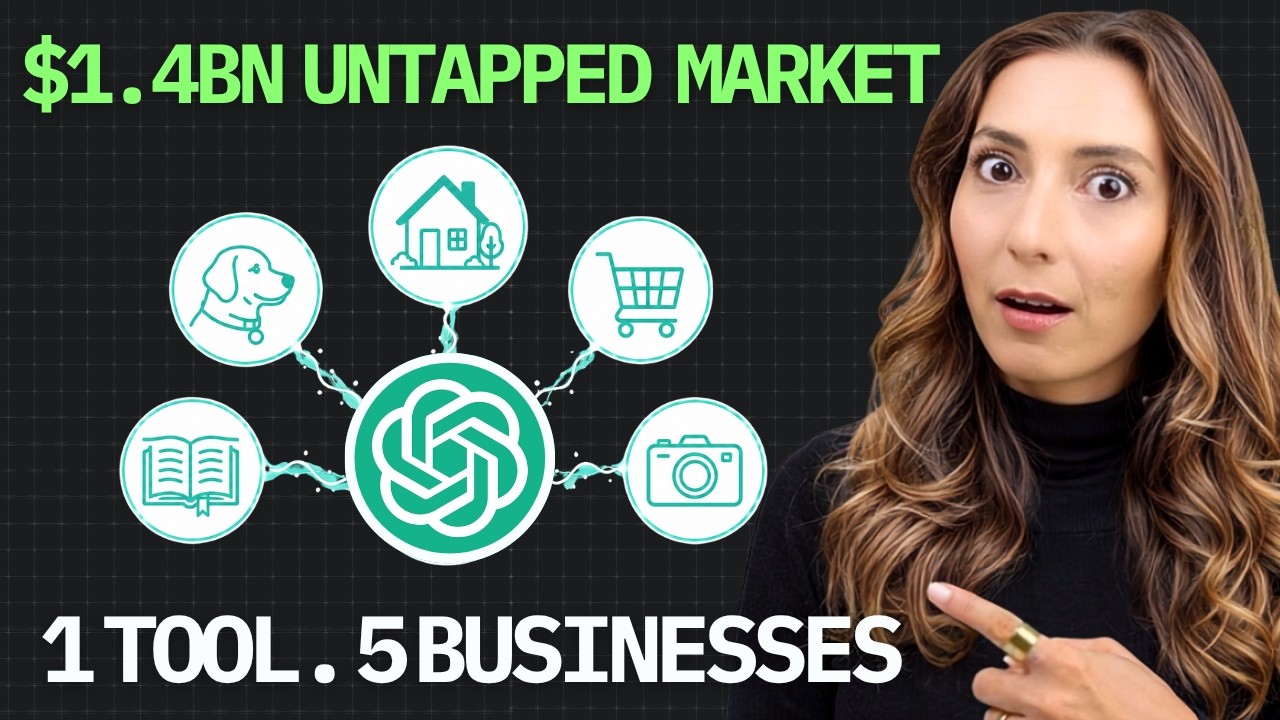
ChatGPT Images 2.0 enables five new service businesses by rendering text accurately, maintaining character/product consistency across images, and reasoning before drawing. Real estate listing staging, product photography for small brands, professional headshots, children's book illustrations, and pet portraits on Etsy all have existing buyers already paying for similar services. The key is to pick one niche, build a client list, and automate the workflow.
Key points
- ChatGPT Images 2.0 renders text at 99% accuracy, holds a character/product consistent across eight images, and plans compositions before drawing.
- Real estate listing engine replaces copywriters, stagers, and photo editors by virtually staging rooms and auto-generating property briefs.
- Product photography for small brands turns one phone photo into hero shots, lifestyle scenes, and branded packaging using Kittl.
- Pro headshots require only 5-10 selfies from clients to generate 50 consistent corporate or creative portraits.
- Children's book illustrations use eight-image consistency mode to keep the same character across 20-30 pages, targeting self-published authors.
- Pet portraits on Etsy deliver six styles (Renaissance, watercolor, anime, etc.) from two photos, with minimal client work and platform-driven leads.
- The gap between having an AI subscription and running a service business has collapsed to choosing a niche and building a client list.
Tools mentioned
Techniques
- Reference image input for consistent room staging
- Eight-image consistency mode for character/product uniformity
- Style prompting for headshots and pet portraits
- Automated property brief generation
- Brand kit retainer model from product photography
Takeaways
- Pick one niche where buyers already pay for the problem, not the tool.
- Start with pet portraits for a fast first sale, then graduate to higher-ticket services.
- The asset you build is the niche, prompts, and client list, not the tool itself.
- Automate the workflow after proving the process to scale into a software-like business.
Transcript (captions)
6 weeks ago, Open AI dropped Chat GPT Images 2.0. Within 12 hours, it scored 242 points above every other image model on the leaderboard, the biggest lead that anyone has ever recorded. And almost everyone is using it to make memes or other lower ROI practices. Instead, I think people should be doing something else. People can sell five services that didn't exist 3 months ago in the same shape or form. And these are real services with real buyers who are already paying somebody, and now that somebody can be you. Today, I'm going to show you exactly five of these business ideas, the clients, the workflow, and the one Images 2.0 trick that makes each one possible. Two of these, I would probably start tomorrow if I weren't already busy with all of my other businesses. One has buyers so emotional that they barely look at the price. And one is hiding inside a $1.4 billion category that almost no one is touching yet. Now, if you've been around and you've watched this channel before, you probably know that I only talk about serious business opportunities. This is the actual playbook for someone with not much design background, no audience, and 4 to 5 hours a week. Now, most people watching this still think AI image generation is a toy. It's cool for memes, but not for business. But that belief is 2 years out of date. Three things changed in April when Images 2.0 was launched. First, the model renders text at 99% accuracy. Menus, packaging, posters, signage, all the things that used to be real deal-breakers for paying clients now actually work beautifully. Second, it holds a character or a product consistent across eight images in one prompt. Same person, same dog, same candle, eight scenes. That is the entire reason that some of these business ideas are actually possible or just a lot easier today than they were 6 months ago. Number three, the model actually reasons before it draws. It plans the composition, the outputs look art-directed instead of slot machined. Now, put those three things together, and you no longer have just a simple boring image generator. You actually have an entire one-person production studio in your browser tab. That brings us to the five services. So, here's the map. I'm going to do this intentionally in a very specific way, okay? You see, the trap with every AI business idea video on this platform and everywhere else is that they hand you the tool and skip the buyer. The tool is the easy part. Picking the buyer who already has the budget is a problem that many people don't know how to solve for. Especially a buyer who already has the budget for the exact thing that the tool now can solve. That's the business. So, every service that I'm about to show you starts with a buyer that is already paying somebody. You're just becoming the somebody, if that makes sense. All right, so, let's go. Idea number one and service number one is the realtor listing engine, okay? Because real estate agents have the same problem in every single city. Empty rooms do not sell. Bad photos kill showings. Writing a property brief takes 3 hours every time. And they already pay copywriters, stagers, and photo editors separately by the project full price. So, what you can do is you can replace all three with one workflow. The agent notifies you of a new property and sends you the link to the property listing. Then, you pull that into Images 2.0. It picks up the property details, it picks up the images, and turns the empty rooms into virtually staged scenes, modern, scandi, family, luxury, eight versions per room, if you choose to. And they're all consistent. And then all you need to do is wrap it into an auto-generated property brief document. And with that, you just send the whole package back the same day, technically. You can charge per listing, but I believe a smart play here would be a monthly retainer for a multi-agent brokerage that lists tens of properties a week. We actually work with real estate sellers in many locations, and the agents who close the most deals tend to be the ones whose listings look like the property is already worth the asking price, if not more. So, you're not selling them photos, you are helping them increase their close rate. And the Images 2.0 piece that makes this real is reference image input. Basically, the room that you stage is still their actual room. Okay? The same windows, same architecture, same lighting, >> [music] >> because buyers will want to see how it feels, and they're not buying because the images say it's AI. They're buying because they want the feeling of being in that space, if that makes sense. Now, idea number two and service number two, that is product photography for small brands. Every Shopify store, every Etsy seller, every Amazon FBA operator has the exact same problem. Studio product photography costs a lot per shot. They cannot afford it in many cases, so they post phone photos or try their own luck with AI without really knowing how to do it, and then their conversion suffers, and they know it, but they just live with it. But now they don't have to. Now, all they have to do is send you one phone photo of their product, and then you return a hero shot on a white background, five lifestyle scenes. Let's take this candle, for example. You can send a candle on a marble bathroom counter, a candle beside a bathtub, a candle on a nightstand, multi-angle shots for the product page, add variants with text overlays, all from one phone picture. And it'll probably take you 30 minutes to an hour. But here's where a beginner trying to actually sell this service will end up hitting a wall, probably. One photo is not a brand. The Shopify owner that you're pitching also needs more than just a hero shot. They need a logo on the label that actually looks designed. They need that candle in five different scenes. They need a 15-second video for Instagram. They also need multiple angle shots for the product page, and right now, that's five different tools and five different skills, which is also why today's video is in partnership with Kittl. Kittl is not an AI image generator only. It is the full design to product pipeline in one tab. So, all you need to do is take the photo that we just made in Images 2.0 and drop it into Kittl. And from that one image, it generates a finished product mock-up with branded packaging. It spins out multiple angle shots that look like the same studio shot. It builds your social ad video and outputs a full set of marketing assets. All matching, all in one single place. And that is the difference between selling a low-budget product photo and selling a premium monthly brand kit. Same skill, much better business. Now, if you want to give Kittl a try, the link is going to be in the description, so you can try Kittl for yourself. Thank you so so much Kittl for partnering with us on today's video. Now, let's get to idea number three. Service number three is Pro Headshots. The most universal pain on this entire list, I believe. A professional headshot session costs hundreds of dollars. It It requires a studio booking, and most people don't have one current professional photo of themselves. The result tends to be a LinkedIn full of people using selfies that they took in 2019. The workflow is almost embarrassing in how simple it is. Basically, clients send you five to 10 selfies. You feed them into Images 2.0 with a style prompt like corporate, creative, outdoor, monochrome, branded background. The model holds their face consistent across 50 outputs, and then you send back the gallery. You can choose your price in a way so your buyer wouldn't argue because the alternative is a lot more money and a Saturday morning at a studio. Now, real estate agents, financial advisers, sales reps, job seekers, every one of these people needs a fresh headshot probably every two years. This is a service that compounds. The same client will come back. Now, the first time I ran the output side by side with the real studio session, I had to look twice to spot which one was which. And next, idea number four, or service number four, this is children's book illustrations. This one is hiding inside a a billion-dollar category, Self-published children's books on Amazon. Most authors actually tend to give up before they finish because traditional illustration costs thousands per book and they can't afford it. So, they use stock art or they stop writing or again, they try their own luck, but they don't know what they're doing with AI. So, you charge less, you deliver 20 to 30 illustrated pages, the character is the same kid with the same dog in the same world every single spread. That last part is what wasn't possible 6 months ago, but Images 2.0 now has eight image consistency mode, which means that you can finally make a real book. The buyers are not so hard to find, actually. Or not so hard as you might think. Facebook groups for KDP authors, Reddit's are self-published thread, children's book writing courses. They already know the cost of a real illustrator. The moment you tell them that you can do it for a fifth of the price with the same character on every single page, you should be in. And I think the part that I love the most about this idea is that authors don't just pay you once. They usually write series. The same character shows up in book two and book three and book four and the first sale is the hard one, but the next four are just an email or a text message away. And actually, there are people in our hive who do this, so I know for sure it works. Now, service idea number five is pet [music] portraits on Etsy. I think the easiest first sale you will ever make is based on this idea because the customer is not logical. They just love their dog. I know I do. And this is a market already trained to spend $200 on a custom portrait from a human illustrator. Etsy is full of them. They sell. But with Images 2.0, you deliver the same product in 10 minutes for much less and you still walk away with margin. The owner sends two photos of their pet and you return six versions like a Renaissance painting and royal portrait and watercolor and anime and retro film Pixar style and then they pick the favorite and you ship a digital file plus an optional framed print upsell. But, you can get very creative here and have that in a completely new presentation form like, I don't know, printed on wood or on stones. Or, I mean, we're going to put here lots of creative ideas that we found. There's no shortage of them. And I'm sure you're creative and you'll come up with something as well. Now, the reason this is the right starter service is because there is very little client work. There's no pitching. You build the Etsy store, you list 20 styles, and then the algorithm does the marketing. The platform has the leads already. So, the first sale comes from the listing photos themselves. If you've never made a dollar with AI, this is the one that I would start with this weekend if I had the time. Because honestly, the bar to entry is roughly, do you have a laptop and access to chat GPT? >> [snorts] >> That's it. Now, the mistake that people make watching a video like this is that they try to do all five. Don't. Promise me. Just pick one. Specifically, pick the one where the buyer is already paying somebody else for the exact problem. For most of you, that's realtors or product brands. That's where the recurring monthly revenue lives. Now, if you're brand new and you want a fast first sale to prove this to yourself, maybe start with pet portraits. Get your first payment in, and then graduate to the higher ticket services. The thing that compounds is the niche, not the tool. I promise you. The realtor service stops being a service after your 10th client and it becomes more of a software business after that. Same with the product photo service. You can turn that into a brand kit retainer or the illustration service. That can turn into a publishing imprint. The tool is the same for all of them, but the asset you build is the niche, the prompts, and the client list. Obviously, results depend on the niche that you pick, the effort you put in, and how you sell. I'm just showing you the playbook, but the outcome is always yours. Look, six weeks ago, OpenAI dropped a tool. Most people opened it once, made a meme, and closed it. Others started building businesses on top of it. The gap between I have an AI subscription and I actually have a service and a business used to be six months of learning Photoshop and Premiere Pro and portfolio, but that gap just collapsed to a process of choosing a niche. If you want help picking which of these five to start with and the prompts, the pitches, and the templates for all of them, that's usually what we do in our challenges within the AI Business Trailblazers Hive community. It is our free community. You are always more than welcome to join. The link is going to be here as well as in the description down below. So, you're always more than welcome to join. And if you want a lot more hand-holding and more accountability, you're also more than welcome to join our paid community. That is the Founders Hive. The link is also in the description below. Now, the harder question that we did not answer in this video is how do you actually automate all of this once you've proven the process. And that I have spoken about in this video here, so I'm going to see you there. In the meantime, like this video if you did. Be sure to subscribe if you haven't done so. Share it with anyone in your circle of friends or family or co-workers who you think needs [music] that extra nudge to get started with AI in starting their own business. Thank you again, and I'll see you next time. Bye.
Jobs for this video
| Stage | Status | Attempts | Last error | Updated |
|---|---|---|---|---|
| summarize | done | 0 | — | 2026-06-22 22:01:18.766117+00:00 |
| transcript | done | 0 | — | 2026-06-22 22:00:37.658341+00:00 |
| metadata | done | 0 | — | 2026-06-22 22:00:24.869958+00:00 |